Protection Training: Controlled, Commanded, and Reliable
Protection training is the final pillar in every Guardian dog’s development, and it only begins once a dog has already demonstrated reliable obedience and solid socialization. This isn’t a formality. It’s a deliberate safeguard. Protection work layered onto an unfinished foundation produces an unpredictable dog. Protection work layered onto a genuinely solid foundation produces a dog whose protective capability is precise, controlled, and only active when it’s actually needed.
It’s worth being direct about this: a dog is not considered ready for placement simply because it can perform an impressive protection demonstration. Impressive and reliable are two different standards, and we hold every dog to the second one before it’s considered finished.
Book a Free Consultation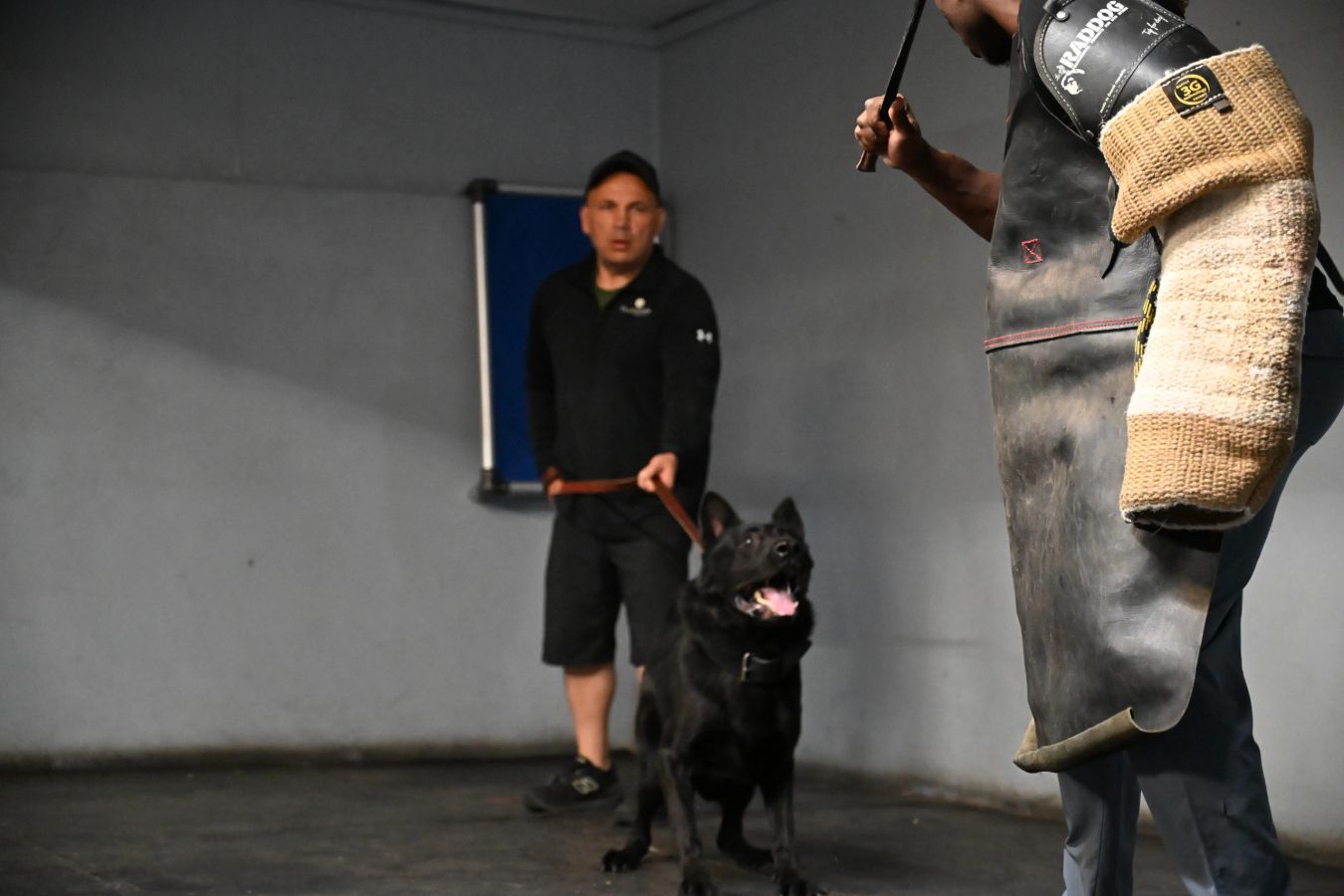
The Difference Between a Guard Dog and a Trained Protection Dog
This distinction is worth spelling out clearly, because the two are often confused. A guard dog typically relies on natural territorial instinct, reacting to anything unfamiliar with little formal command structure behind that reaction. A trained protection dog, by contrast, has been taught to distinguish between ordinary activity and a genuine threat, to respond to specific commands, and to disengage reliably once directed. Every dog that completes our program is a trained protection dog in this sense, not a dog that simply reacts to its environment on instinct.
Evaluating Readiness for Protection Training
Not every dog that completes obedience and socialization automatically moves into protection training on a fixed timeline. Our trainers evaluate each dog’s readiness individually, looking at nerve strength, confidence, and how solidly the earlier training has held up under increasing distraction and difficulty. A dog that isn’t genuinely ready doesn’t get pushed into this phase simply because of its age or intended placement date, the foundation has to be solid first.
What Protection Training Actually Involves
Contrary to what many people picture, protection training isn’t primarily about aggression or bite work in isolation. It’s about teaching a dog to recognize a genuine threat, respond to a specific command with a specific, controlled action, and, just as critically, disengage completely and reliably once directed or once the threat has passed. A dog that can’t reliably stand down on command isn’t protection trained by our standards, regardless of how impressive its bite work looks in a demonstration.
Command-Based, Not Instinct-Based
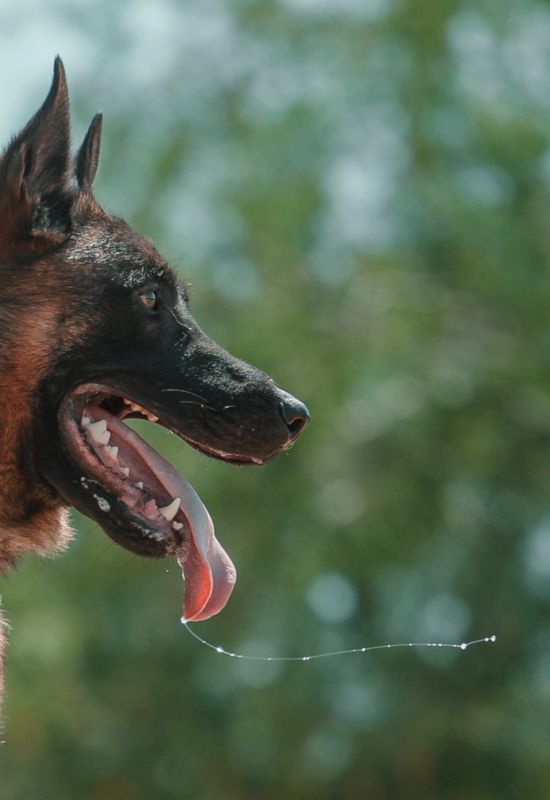
We deliberately train dogs to act on handler direction rather than making independent judgment calls about who is or isn’t a threat. This distinction matters enormously in real life. A dog trained to decide for itself when a situation warrants a protective response creates real liability, it may misjudge a delivery driver, an enthusiastic guest, or a child’s sudden movement as a threat. A dog trained to respond to specific commands under specific conditions remains predictable and genuinely safe to live with, while still being fully capable when a real threat is present and you direct it to respond.
Scenario-Based Training
Our protection training incorporates realistic scenarios rather than only controlled, repetitive drills. Dogs are tested against unpredictable elements, different environments, different approach angles, unfamiliar decoys, and varying levels of intensity, so that the training generalizes to real situations rather than only holding up in a familiar, controlled setting. A dog that only performs well in the exact scenario it was trained on hasn’t been prepared for the unpredictability of actual life.
How We Test Reliability
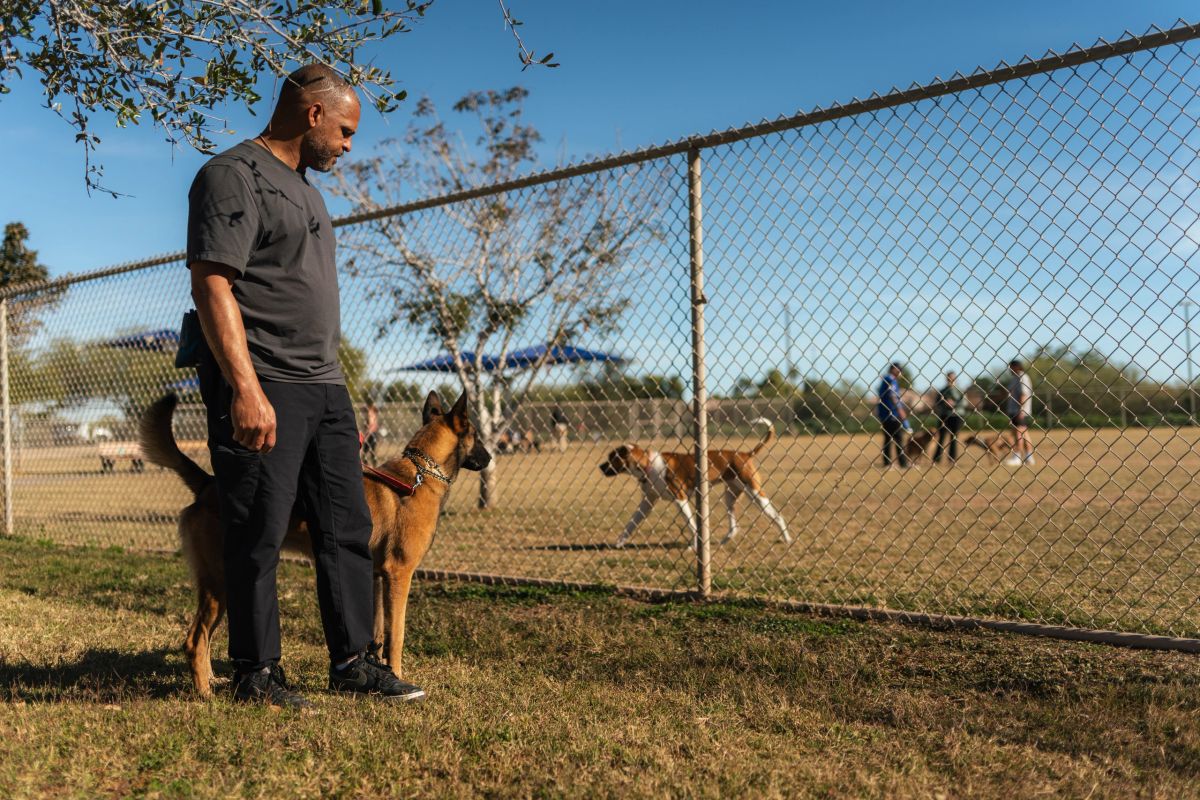
Before any dog is considered ready for placement, its protection training is tested repeatedly under varying conditions to confirm the response is genuinely reliable rather than a one-time success. This includes testing the dog’s ability to disengage completely on command, not just its ability to engage when directed, a dog that responds well to an engage command but struggles to reliably stand down afterward is not considered finished, regardless of how capable the initial response looked.
Training Tiers and Protection Depth
Not every client needs or wants the same level of protection training, which is why we offer dogs at different tiers, each one building meaningfully on the capability of the last. Here’s a general sense of what separates them.
Tier 1
A Tier 1 dog carries flawless on- and off-leash obedience through the everyday environments your family actually lives in, urban streets, suburban neighborhoods, and life around a residential household, paired with genuine situational awareness and the instinct to recognize when something isn’t right. Its default response to an unprovoked approach is calm, deliberate positioning, present enough to discourage escalation before it starts. When a real command to engage is given, the response is controlled and immediate, and the release is just as absolute, a Tier 1 dog comes off a threat completely the moment you tell it to, even under real adrenaline. Outside that narrow window, it’s exactly the dog you’d expect to have around your family: entirely unbothered by everyday stressors, friendly visitors, and the pets already living in your home.
Tier 2
Tier 2 is built for handlers who need that same reliability to hold up under genuine chaos, not just a controlled training environment. These dogs maintain absolute command compliance through extreme auditory and visual disruption, gunfire, dense crowds, a physical altercation breaking out around them, without losing focus on the handler directing them. Their training also introduces a meaningful degree of independence: clearing a structure, disrupting a home invasion already in progress, or securing an exit route without every step being individually managed. Engagement scenarios grow more complex at this tier as well, multiple attackers, defending against a forced vehicle extraction, and remaining effective even against an armed adversary. Tier 2 dogs are additionally acclimated to the environments high-mobility clients actually move through, private aviation, maritime travel, and executive-level convoy movement, so the dog performs consistently whether it’s on your property or traveling with you.
Tier 3
Tier 3 is our highest level of capability, and it starts with the dog itself: these animals are selected from the top tier of working-line genetics, chosen specifically for a level of neurological stability and composure under pressure that has to exist naturally before it can be trained further. That foundation supports advanced threat detection and the ability to alert and respond appropriately without waiting on a command, including scenarios where a handler is temporarily unable to direct the dog directly. Training at this level extends into genuine combat maneuvering, dynamic room entry, sustained engagement against an armed adversary, and the composure to hold up through a prolonged encounter rather than a brief one. Because a dog at this level is only as effective as the household it’s integrated into, every Tier 3 placement includes a fully immersive, on-site transition led by our senior trainers, complete with environmental proofing conducted at your actual residence and ongoing consultation for the life of the dog.
We’ll help you determine the right tier for your specific situation during your consultation rather than assuming more advanced training is automatically the right choice for every household.
Safety as the Top Priority
Every stage of protection training is approached with safety as the primary consideration, for the dog, for our trainers, and ultimately for your family and the people your dog will encounter throughout its life. This is exactly why protection training is the last pillar, built only on top of a foundation that’s already proven solid, rather than an isolated skill trained in a vacuum.
Questions About This Stage of Training?
If you’d like more detail on how a specific dog’s protection training was conducted, or want to understand which tier fits your household’s needs, contact us directly at 610-401-7256 or info@guardianprotectiondogs.com.
Book a Free Consultation